

Purchasing durable and affordable workwear hinges on understanding the concept of Total Cost of Ownership. This means moving beyond the trap of focusing on low prices in a single purchase and comprehensively considering the initial purchase price, lifespan, and maintenance costs of the workwear. A good purchasing guide can help you clarify your thinking and make decisions that are more cost-effective and hassle-free in the long run.
🧵 Step 1: Choose the right fabric to lay the foundation for durability
Fabric is the foundation of workwear durability. Different fabrics vary greatly in performance and cost, and choosing the right blended fabric based on the specific work environment is crucial.
| Fabric type | Features and applicable scenarios | Reference price (2025) |
|---|---|---|
| Polyester-cotton blend (T/C) | The most mainstream choice, combining the abrasion resistance and wrinkle resistance of polyester with the comfort and breathability of cotton. Common blend ratios are 65/35 or 80/20, suitable for most indoor and outdoor light to moderate labor scenarios. | Fabric cost: ¥8 – ¥12/meter |
| 100% pure cotton | It offers the best comfort and breathability, but its durability is relatively poor, and it is prone to wear and shrinkage. Suitable for jobs where extreme comfort is required and wear and tear is not severe. | Fabric cost: Approximately 30% higher than polyester-cotton fabrics of the same weight. |
| High-toughness nylon/Cordura | Extremely durable and abrasion resistant, typically blended in critical areas (such as knees and elbows), offering exceptional resistance to tearing and abrasion. Suitable for extreme environments such as outdoor work and tactical missions. | Fabric cost: Significantly higher than ordinary fabrics; please consult the supplier for details. |
| Functional fabrics | Designed for specific safety requirements, such as flame retardant (FR) and anti-static (ESD), these materials are the most expensive but are essential for high-risk operations. | Anti-static: Fabric cost increases by approximately ¥3-5 per meter |
🏭 Step Two: Identify Key Brands and Define Your Needs
Understanding the major brands in the market can help you quickly identify and find a cost-effective option that suits your needs.
- 🥇 Carhartt (High-end Durability): Founded in 1889, this brand is renowned for its 12-ounce heavyweight cotton canvas and exceptional abrasion resistance, making it the “armored vehicle” of workwear. If your workers are outdoors, frequently kneeling, or in harsh environments, Carhartt’s superior protection and durability, while requiring a high initial investment, offer significant long-term returns.
- 🥈 Dickies (Classic Balance): Founded in 1922, Dickies is renowned for its classic 8.5 oz polyester-cotton twill and wide range of styles, representing the quintessential American workwear. It strikes a good balance between quality and price, providing a professional and clean image at a more economical cost for light to moderate workloads in workshops, logistics, and other similar settings.
- 🥉 Other brands worth noting:
- Berne: As a cost-effective option, it offers more affordable heavy-duty tooling, making it a reliable alternative when budget is limited.
- Red Kap focuses on providing functional clothing for professional fields such as industry and maintenance, with a particularly broad product line in special protection such as flame retardant (FR).
- Uniqlo / GU: These fast fashion brands are more suitable for light-duty environments such as offices, offering options that combine workwear elements with a sense of fashion, but are not suitable for heavy physical labor.
💰 Step 3: Master the strategy to achieve ultimate cost-effectiveness
By mastering fabric and brand knowledge, efficient procurement strategies can significantly reduce total cost of ownership.
- Bulk purchasing: This is the most direct and effective way to save money. By purchasing in bulk and leveraging economies of scale, the cost per unit can be reduced by 20-40%.
- Optimize designs: Standardize the colors of all company uniforms to three or fewer, using basic styles. This reduces fabric batches, lowers printing and dyeing and management costs, and allows for better pricing by increasing the purchase volume of each style.
- Simplified design: For the logo, heat transfer printing (approximately ¥1-3/piece) is cheaper than embroidery (approximately ¥5-8/piece). For accessories, choosing resin buttons (approximately ¥0.1-0.3/piece) instead of metal buttons (approximately ¥0.5-1/piece) can also save money.
- Select a supplier:
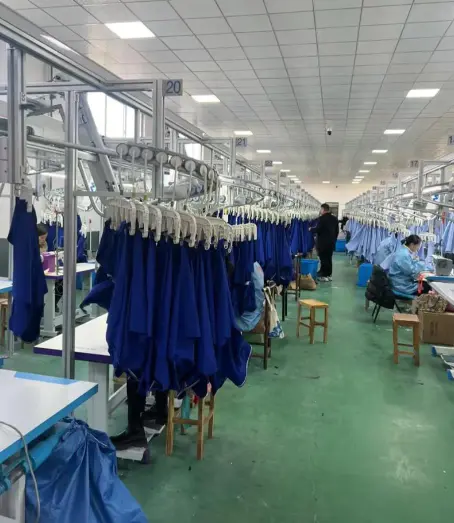
- Direct factory: Working directly with ISO9001 certified factories avoids middlemen and their markups. Industrial clusters in China (such as Shijiazhuang in Hebei, Changshu in Jiangsu, and Guangdong) are excellent locations for finding direct factories.
- Online platforms: For small-batch or trial orders, platforms such as 1688.com are very suitable, as you can find suppliers with an MOQ as low as 50 pieces, but you need to carefully screen them.
- Leveraging community wisdom: Reddit communities like r/Workwear and r/BuyItForLife offer a wealth of genuine reviews from frontline workers, making them excellent channels for discovering hidden gem brands and products that offer great value for money.
🧼 Step 4: Routine maintenance to extend service life
Proper maintenance can extend the lifespan of work clothes several times over. The table below summarizes some key points:
| Operational steps | ✅ Recommended approach | ❌ Avoidance |
|---|---|---|
| Before washing | Turn clothing inside out to protect the surface and logo; pre-treat stubborn stains such as oil stains promptly. | Mixing different colors in a wash may cause staining. |
| Washing process | Use a mild detergent; choose cold or warm water to wash. | Use bleach or detergents containing bleach. |
| Drying method | Air drying is the preferred method, as it is most beneficial for reflective strips on highly visible clothing. | High-temperature drying will accelerate fabric aging and shrinkage. |
| Storage method | Store in a cool, dry place; hang on a wide-shouldered hanger to maintain shoulder shape. | Stuff damp clothes directly into airtight bags or closets. |
| Regular rotation | If conditions permit, prepare 2-3 sets of work clothes for employees to rotate, so that each set of clothes can have enough time to “rest” and recover. | Wearing the same work clothes for several days in a row without changing them. |
💎 Summarize
Purchasing work uniforms is not simply a matter of “buying, buying, buying,” but a systematic project that requires comprehensive consideration of multiple dimensions, including fabric selection, brand positioning, procurement strategy, and daily maintenance. Understanding the concept of “total cost of ownership” can help you make wiser and more economical long-term decisions.
Hopefully, this guide will provide you with a clear understanding. If you would like more targeted advice, please let me know:
- Main application scenarios: such as construction sites, chemical workshops, offices, or outdoor operations?
- Budget range: For example, what is the approximate budget range for each set of work clothes?
- Key requirements: Is the most important factor wear resistance, comfort, safety protection, or brand image?

HAIYUAN’s safety work uniform products have good quality and fast delivery.
I feel at ease every time we cooperate, it’s a good wholesale manufacturer
Previously, we were afraid that the certification for foreign trade orders would not be recognized by overseas customers. Therefore, this factory directly opened the qualification traceability channels for ISO 45001 and ISO 14001. After we synchronized the certificates with the customers, they immediately finalized the annual framework cooperation on the spot.