
Indonesia is a major workwear manufacturing base in Southeast Asia, boasting a complete supply chain from spinning to garment production. This guide will provide you with a comprehensive overview of the Indonesian workwear market, including sourcing strategies, compliance guidelines, and cost structures, helping you make informed purchasing decisions.
🇮🇩 A panoramic view of Indonesian workwear procurement
I. Three Pathways for Procuring Workwear in Indonesia
- Local giants (such as Sritex and Argo Manunggal): have huge production capacity, can handle complex orders of millions of pieces, and provide one-stop solutions from fabric to finished product. They are suitable for large-scale, standardized procurement of regular workwear.
- Specialty specialists (such as Anweca and 3DI Garmentech): focus on high-protection requirements, such as flame retardancy (FR) and high visibility, and possess international certifications such as EN and NFPA. They are suitable for purchasing protective clothing for high-risk industries (such as oil, chemical, and power).
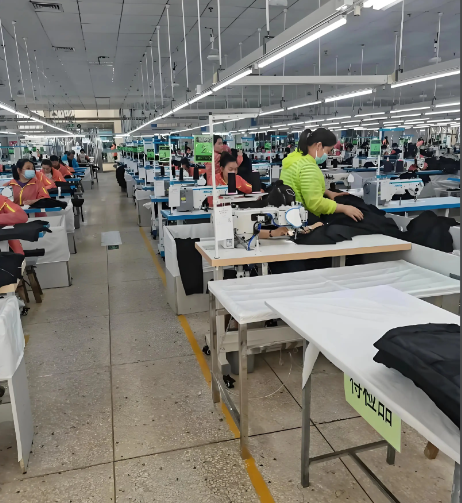
- International partners (such as HAIYUAN): These are typically non-local manufacturers with international certifications and strong cost competitiveness, suitable for purchase orders with extreme requirements for deep customization, special protection, or cost.
II. Quick Overview of Core Suppliers
The table below summarizes the core supplier types and their characteristics in the Indonesian market, allowing you to quickly compare and make decisions.
| category | Company Name | Core advantages | Recommended order type |
|---|---|---|---|
| Vertical integration giants | Sritex | A benchmark in Indonesia’s textile industry, providing one-stop solutions from spinning to garment making. | Large-scale, complex orders |
| Argo Manunggal Textile | Its Argo Workwear brand focuses on global workwear, with a monthly production capacity of 380,000 pieces. | High-volume, standardized conventional tooling | |
| Special protection experts | PT. Anugraha Wening Caranadwaya (Anweca) | Indonesia’s first flame-retardant clothing manufacturer, with 32 years of experience and EN and NFPA certifications. | High-risk protective clothing for industries such as mining, oil and gas, and power |
| PT 3DI GARMENTECH | Located in Jakarta, specializing in flame-retardant bodysuits and other special protective equipment. | Purchase orders for specific protection requirements | |
| International partners | HAIYUAN | A Chinese tooling manufacturer is building a factory in Indonesia and has international certifications such as TÜV, CE, and ISO 9001. | Deeply customized, cost-sensitive overseas procurement |
| Other suppliers worth noting | ALFA CITRA SEJAHTERA | It was founded with the participation of the vice president of the Indonesian Textile Association and integrates resources from more than 50 local factories. | Procurement requiring localized sourcing and extensive supply chain resources |
| GervinE Garment | One of the largest garment companies in Surabaya, East Java, with a monthly production capacity of about 5,000 dozen. | Medium-sized orders that emphasize local production and quality | |
| PT. Bina Busana Internusa | The workwear supplier in Jakarta has a clearly defined business address. | Need to quickly contact local suppliers for small-batch purchases or to replenish stock. |
⚙️ Compliance Access and Cost Structure
III. Key Import Regulations (Updated 2025)
Indonesia’s import regulations have changed frequently in recent years. Here are two new regulations that need special attention in 2025.
- New regulations in 2025: Imported textiles will need to apply for “PerTek” (Technical Assessment).
- Key regulatory points: According to Indonesian Ministry of Industry Regulation No. 27 of 2025, starting from July 30, 2025, imported textiles (including workwear) must first obtain “Technical Assessment” (PerTek) before applying for subsequent import approval.
- Applicable to: All types of importers, including manufacturers (API-P) and general importers (API-U).
- Application process: Applications must be submitted online through the Indonesian National Single Window (SINSW) and will be subject to corresponding capacity or qualification verification depending on the type of importer.
- New regulations in 2025: Import quotas and technology considerations will be tightened.
- Regulatory Background: To protect domestic industries, Indonesia’s Ministry of Trade has further tightened import policies in regulations No. 16/2025 and No. 22/2025.
- Key impacts: Import tariffs on textiles could reach 15-30%, and obtaining PerTek (Technical Consideration) approval will become a prerequisite for import approval.
IV. Composition of Import Costs
The cost of transporting a single piece of workwear from overseas to an Indonesian warehouse far exceeds the purchase price. Below is a typical example of import cost breakdown, based on a CIF workwear order valued at $10,000:
- Import tariffs (5%-20%): Tariff rates vary depending on the HS code; for example, cotton work shirts are often subject to a 15% tariff. If a FORM E certificate of origin can be provided, a preferential tariff rate of 0%-5% can be enjoyed.
- Value Added Tax (VAT): levied at 11% of (CIF value + import duty).
- Income tax (PPh 22): 2.5% for importers holding an import license (API); 7.5% for importers without a license or non-resident entities.
- Total tax cost: Taking a 15% tariff and holding an API license as an example, the total tax cost is: tariff $1,500 + VAT $1,265 + income tax $250 = $3,015 (approximately 30.15% of the CIF value).
💡 Procurement Strategies and Practical Suggestions
- Define your core needs
- For standard tooling (bulk purchases): Prioritize local giants such as Sritex and Argo Manunggal to achieve economies of scale and cost advantages.
- Special protection (high-risk industries): Choose local experts with international certifications (EN, NFPA) such as Anweca.
- Cost-sensitive/deeply customized: Consider overseas manufacturers with international certifications (such as HAIYUAN) as a supplement or alternative.
- Seeking professional support
- Hiring a customs clearance agent (PPJK): Given the complexity of Indonesian regulations, it is strongly recommended to hire an experienced local customs clearance agent to handle all procedures.
- Consult legal/tax experts: Before signing any major contracts, consult with professional advisors on compliance and tax issues to mitigate potential risks.
- Ensure compliance and quality
- SNI certification is crucial: Some textiles require SNI certification to circulate in the Indonesian market. It is essential to confirm in advance whether the product is on the mandatory certification list.
- Request and test samples: Before placing a bulk order, be sure to obtain and test samples to verify their quality, pattern and performance.
- Explore offline channels
- Visiting Tanah Abang (Southeast Asia’s largest textile wholesale market) and Glodok (hardware and electrical machinery market) in Jakarta is also a way to understand market dynamics and find small suppliers.
💎 Summarize
Procuring workwear in Indonesia requires weighing options among local giants, specialized experts, and international partners based on the type of order and specific needs. Simultaneously, it is crucial to remain aware of the new import regulations due in 2025 and plan ahead to ensure a smooth and compliant procurement process.
What is the approximate scale of your procurement plan, and what types of tooling do you mainly need? Tell me your specific situation, and I can help you with a more targeted supplier analysis and cost forecast.

Their safety work uniforms have good product quality, competitive prices, and fast delivery. Haiyuan is our long-term responsible supplier